Why Gym Benefits Fail for Teams
A monthly gym benefit looks generous on paper, but almost nobody uses it. Learn why it fails and what works better for a downtown Greenville team.
by: Kara Petruzzelli
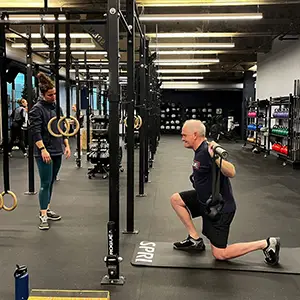
Money for the gym is the most popular corporate fitness benefit in America. It is also the one almost nobody uses.
If you run a company, you may have lived this. You add $50 or $100 a month for gym costs. You announce it in a meeting. A few people sign up somewhere. Three months later, you check the numbers and most of the money never moved. The benefit just sits there.
This is the third post in our series on corporate fitness. The first one covered productivity — more energy after lunch, fewer desk-life aches, better sleep. The second covered morale — what happens to a team when they train together. This one covers the benefit most companies pick first, and why it so often goes nowhere.
The Gym Benefit Looks Great on Paper
Nobody picks a gym benefit because they are lazy. They pick it because it seems fair and easy.
Everyone gets the same amount. People can choose their own gym. HR does not have to manage anything. It shows up as one clean line in the benefits packet. On paper, it is the perfect wellness benefit.
But a gym benefit only pays for a gym. It does not get anyone to the gym. Those are two very different problems, and the second one is the one that matters.
Handing someone money for a membership is like handing someone money for a library card and expecting them to finish more books. The card was never the hard part.
The Boring Reasons Nobody Uses It
When a gym benefit goes unused, it is rarely one dramatic reason. It is a pile of small, boring ones:
- The gym is too far. If it takes 25 minutes to drive there, a lunch workout is impossible and an after-work one eats the whole evening. The math kills it before motivation ever gets a vote.
- Parking is a fight. Downtown, this alone can end the habit. Circling the block for ten minutes before a 45-minute workout is not a routine anyone keeps.
- Nobody is coaching. Most people walk into a big gym and do not know what to do. So they wander, copy someone, get sore in the wrong places, and quietly stop going.
- The place is crowded and anonymous. Waiting for equipment in a room where nobody knows your name is not a habit. It is a chore.
- It all runs on willpower. After a ten-hour day, willpower is gone. If the plan depends on it, the plan fails on the very days people need the workout most.
Notice that none of these are money problems. That is why more money does not fix them. A bigger monthly gym allowance just buys a nicer membership that also goes unused.
Then Leadership Draws the Wrong Lesson
Here is the part that stings. When the money sits unused, someone in leadership looks at the numbers and says it out loud: "We tried wellness. Our people just aren't into it."
So the budget gets cut, and the idea gets shelved for years.
But the people were never the problem. The design was. The company bought access when the team needed a place, a coach, and a time that fits a workday. Blaming employees for an unused gym benefit is like blaming them for skipping a meeting that was scheduled at midnight across town.
The idea still works. We hear it from the companies whose people train here:
"Several of our employees regularly attend classes at Seven Victory. I have seen an energy ignite in the team and an enhanced commitment to performing at a high-level both personally and professionally."
— Chris Harrison, President, Dunean Capital Management
That did not come from a reimbursement form. It came from people actually showing up, week after week.
What Works Instead
The fix is not complicated. Replace "here's money, good luck" with a real place people will actually go. For a downtown Greenville office, that means:
- Close enough that time stops being the excuse. Seven Victory is at 301 North Main Street, across from the Hyatt, with indoor garage parking. A lunch class fits inside a lunch hour, and locker rooms, showers, and towels mean people walk back into a 1 p.m. meeting looking sharp.
- Coached, not self-serve. Personal training for people who want a plan built around their own body and schedule. Small group classes where the coach watches form and knows everyone's name. Nobody wanders. Nobody guesses.
- Something for everyone on the team. Golf fitness, stretch therapy, nutrition coaching, and an infrared sauna mean one membership can fit the marathoner and the person who has not trained in ten years.
- Sized to your team, not a formula. We build corporate memberships around how many people will actually use them. A business punch card is an easy first step — a few people try classes, and you see what comes back to the office.
Our corporate page carries the industry's favorite stat — that 89% of employees with wellness programs are highly engaged and happy at work. Treat that as the sales pitch. The proof is simpler: people use a benefit they like, and they skip one they don't.
Start Smaller Than You Think
You do not need a company-wide rollout, a wellness committee, or a launch email. You need three or four people who will actually go, and a gym good enough and close enough that they keep going.
Start there. Let the habit spread on its own. It will — because the people who train come back to the office with more to give, and coworkers notice.
Next in this series: how a Greenville company actually rolls corporate fitness out, step by step, without making it a project.
Ask about corporate memberships or book a free intro and come see the space.