Why Corporate Fitness Boosts Productivity (And What Actually Makes It Work)
Desk-bound teams lose hours to low energy and afternoon fog. Here's why real corporate fitness — not another unused gym stipend — makes Greenville companies sharper.
by: Kara Petruzzelli
Most companies already know their people sit too much. What they underestimate is the cost of that sitting.
It does not show up as a dramatic sick day. It shows up as 2:30 p.m. brain fog. As the meeting that could have been twenty minutes and somehow lasts an hour. As the high performer who is technically at their desk, but running on fumes.
That is not a motivation problem. It is a body problem. And it is one of the most fixable leaks in a downtown Greenville office.
This is the first piece in a short series on corporate fitness: why it makes teams sharper, how it changes culture, and what actually gets people to show up. Today is the productivity case.
The Real Productivity Drain Is Not Absenteeism
HR dashboards love sick days. Those are easy to count. The bigger leak is presenteeism: people who come in, answer Slack, and still cannot do their best work.
A body that has been in a chair since 7:30 a.m. is not set up to think clearly. Blood flow drops. Hips tighten. The afternoon crash arrives on schedule. You can throw another coffee at it. You cannot caffeine your way out of a nervous system that has been stuck in sit-and-scroll all day.
When someone trains with a plan — even two or three times a week — a few things change that directly affect the workday:
- Energy that lasts past lunch. Strength work and real movement raise baseline energy. The 3 p.m. slump gets smaller.
- A cleaner head. Exercise is one of the most reliable ways to drop stress hormones and come back to a problem with some distance on it.
- Fewer "I'm fine" injuries. Desk life produces the same complaints on repeat: low back, tight hips, cranky shoulders. Those do not always take someone out of the office. They just make every hour more expensive.
- Better sleep, which is the real performance drug. People who train consistently sleep harder. That is when the actual recovery — and the actual thinking — happens.
None of this requires a 90-minute grind or a 5 a.m. identity crisis. It requires a place they will actually go, and a coach who will not waste the hour.
Why the Typical Corporate Gym Benefit Fails
Here is the pattern we see with downtown teams. The company adds a gym stipend, or a big-box corporate rate, or an app. For two weeks, a few people try it. Then the benefit sits unused, and leadership concludes "wellness doesn't work."
The benefit failed. The idea did not.
Unused benefits fail for boring reasons:
- The gym is a 25-minute drive from the office, so it never fits a lunch hour.
- There is no parking, or the locker room is an afterthought, so people show up to the next meeting still sweating.
- Nobody is coaching them. They wander, they guess, they get sore in the wrong ways, and they quit.
- The space is crowded and anonymous. High-output people will not fight for a squat rack on their only free hour.
If the plan depends on willpower after a ten-hour day, it is not a plan. Practical fitness works for working people because it is built around how a body has to move in real life — lifting a kid, walking a job site, sitting through a board meeting without paying for it later.
What We Hear From Companies That Train Here
This is not abstract. Downtown teams already train at Seven Victory, and the people who run those companies notice it.
"Several of our employees regularly attend classes at Seven Victory. I have seen an energy ignite in the team and an enhanced commitment to performing at a high-level both personally and professionally."
— Chris Harrison, President, Dunean Capital Management
That is the productivity case in one sentence. Not a step-count contest. A team that has more to give.
What a Workday-Friendly Gym Actually Looks Like
If you want corporate fitness to show up on a P&L, it has to fit a workday. That is why the details matter more than the slogan.
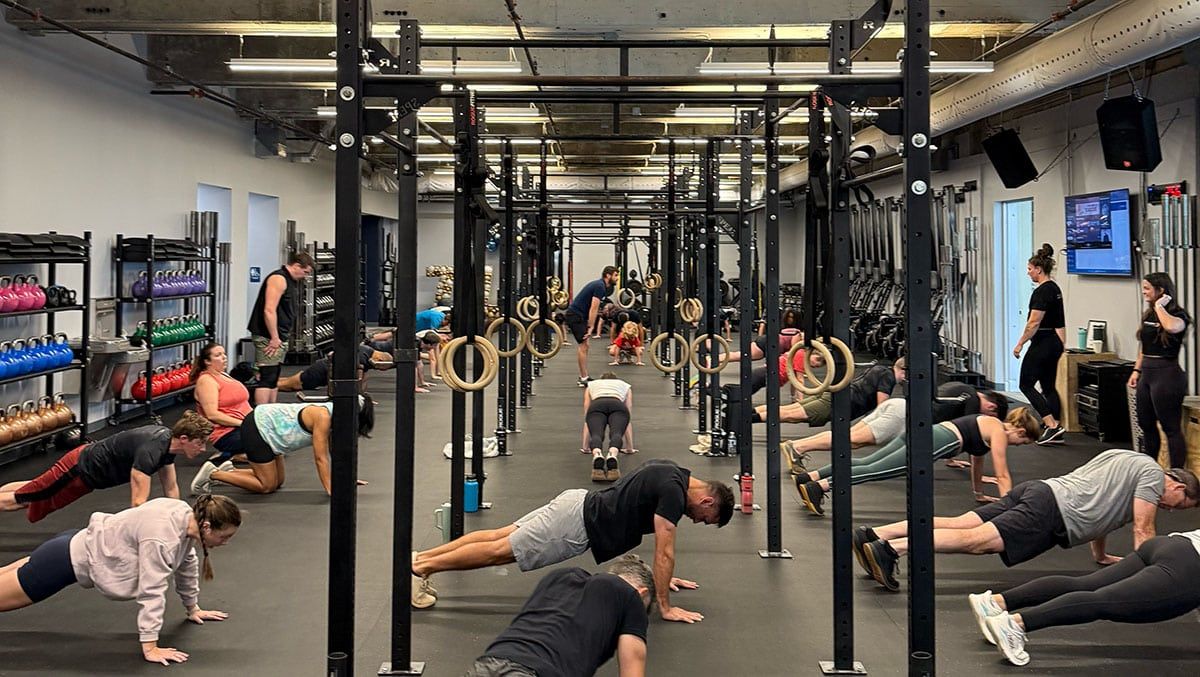
Seven Victory sits at 301 North Main Street, across from the Hyatt, with indoor garage parking. People can train before work, at lunch, or on the way home without the downtown parking tax. Full locker rooms, showers, and towels mean they can walk back into a client meeting looking like they work there.
The training itself is coached. Personal training for the people who want a plan built around their body, their back, and their calendar. Group classes with caps small enough that the coach can still see your form. An infrared sauna for the days when the work was the hard part and the body just needs to downshift.
That combination is what makes the hour worth taking. People do not protect time for a warehouse of machines. They protect time for a coach and a room that is not chaos.
If You Lead a Team Downtown, Start Here
You do not need a 40-person rollout on day one. You need a handful of people who will actually use it, a membership that does not punish them for having a job, and a gym close enough that "I don't have time" stops being true.
We build corporate memberships around team size — including a business punch card if that is the right first step. Tell us how your office actually works, and we will tell you what fits.
Next in this series: how fitness changes workplace morale, and why that is not a soft metric.
Ask about corporate memberships or book a free intro and come see the space.