Golf Fitness Isn’t Guesswork: Why An Assessment Comes Before Training
Learn why Seven Victory starts golf fitness with TPI-based movement screen and swing video analysis.
by: Erick Arbe
If you’re serious about improving your golf game, swinging harder or hitting more balls usually isn’t the answer.
A better golf swing starts with a better understanding of your body.
At Seven Victory Fitness Collective, we take a different approach to golf fitness. Instead of jumping straight into workouts or generic strength programs, we begin by evaluating how your body moves, where your limitations are, and how those limitations may be affecting your swing. When we combine that physical assessment with video analysis of your golf swing, we get a much clearer picture of what’s really holding you back — and more importantly, what to do about it.
Why Golf Fitness Has to Be Personalized
Contrary to popular belief, Golf is an athletic movement that demands mobility, stability, balance, coordination, and power. Two golfers may have the same slice, loss of distance, or back pain - but for completely different reasons.
One golfer may lack hip mobility. Another may have poor thoracic rotation (myself included!). Someone else may be dealing with core instability, balance issues, or limited range of motion in their shoulders. If everyone gets the same training plan, most of them are wasting time.
That’s why we don’t guess.
We evaluate first.
The Role of the TPI Assessment
As a PGA professional, I use TPI-based assessment principles to evaluate how a golfer’s body is functioning in relation to the golf swing.
The goal is simple: identify the physical limitations or weaknesses that may be contributing to swing inefficiencies, inconsistency, pain, or lost power.
A TPI-style golf fitness assessment can reveal issues like:
- Limited hip mobility
- Poor thoracic spine rotation
- Lack of glute activation
- Restricted shoulder movement
- Core weakness or instability
- Balance and coordination deficits
These things matter more than most golfers realize. If your body can’t physically get into the positions your swing requires, your swing will always be forced to compensate.
And compensation is where problems start.
Why Swing Video Analysis Matters Too
The physical assessment is only half the picture.
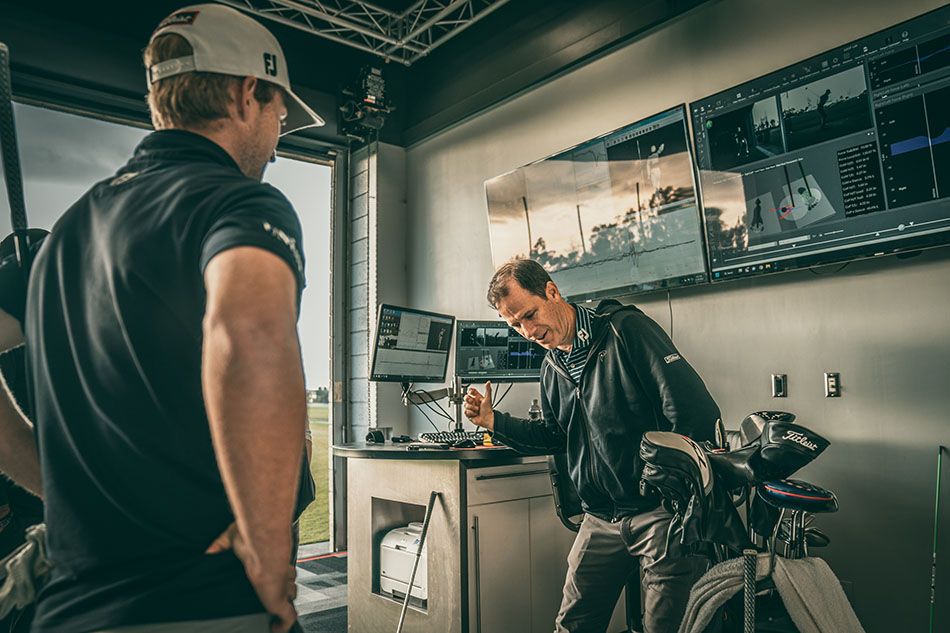
We also look at video analysis of your golf swing to connect what the body is doing with what the club is doing.
That’s where things get interesting.
For example, if a golfer struggles to rotate through impact, the video may show early extension, a loss of posture, or an overactive upper body. On its own, that’s useful. But when we pair that video with a movement screen and see that the golfer has poor hip internal rotation or limited thoracic mobility, now we know why it’s happening.
Instead of just chasing swing positions, we can address the root cause.
A More Holistic Way to Improve
This process gives us a holistic view of the golfer.
We’re not just looking at technique. We’re not just looking at fitness. We’re looking at how the body and the swing interact.
That allows us to build a plan that is much more targeted and effective.
Depending on what we find, that plan may include:
- Personal training to improve mobility, stability, and strength
- Corrective exercise to address movement limitations
- Performance training for more speed and power
- Coordination between fitness goals and swing goals
- A progression built around the golfer’s actual needs, not a generic template
This is a smarter path forward because it respects the reality that better golf performance isn’t just technical — it’s physical.
Why This Matters for Real Golfers
A lot of golfers are frustrated because they feel like they’re working hard without making real progress.
They take lessons. They practice. They play more. They maybe even start exercising.
But if the body is the limiting factor, improvement stalls.
When you identify weaknesses first, training becomes more purposeful. The golfer understands what needs to improve, why it matters, and how it connects directly to their game.
That leads to better buy-in, better training, and better results.
Our Process at Seven Victory Fitness Collective
At Seven Victory Fitness Collective, we believe the best plan starts with clarity.
That’s why our golf fitness process begins with:
- A movement and physical evaluation using TPI-based principles
- Video analysis of the golf swing to identify swing patterns and compensations
- A personalized plan based on what the body and swing reveal together
- Targeted personal training to improve the specific weaknesses limiting performance
The result is a more complete roadmap for improvement — one that helps golfers move better, swing more efficiently, and perform at a higher level.
Final Thoughts
At the end of the day, golf fitness is simply FITNESS.
If you want real improvement, you need to fix your body first. You need a process that identifies what your body can and can’t do, how that affects your swing, and what needs to change to move forward.
That’s exactly what we do at Seven Victory Fitness Collective.
We assess first. We find the weakness. We connect it to the swing. Then we build the plan.
That’s how golfers improve for real.