Why Working Out Together Makes a Stronger Team
Team spirit is not fluff. When coworkers train together at a downtown Greenville gym, they trust each other more, talk more, and give more.
by: Danielle Arbé
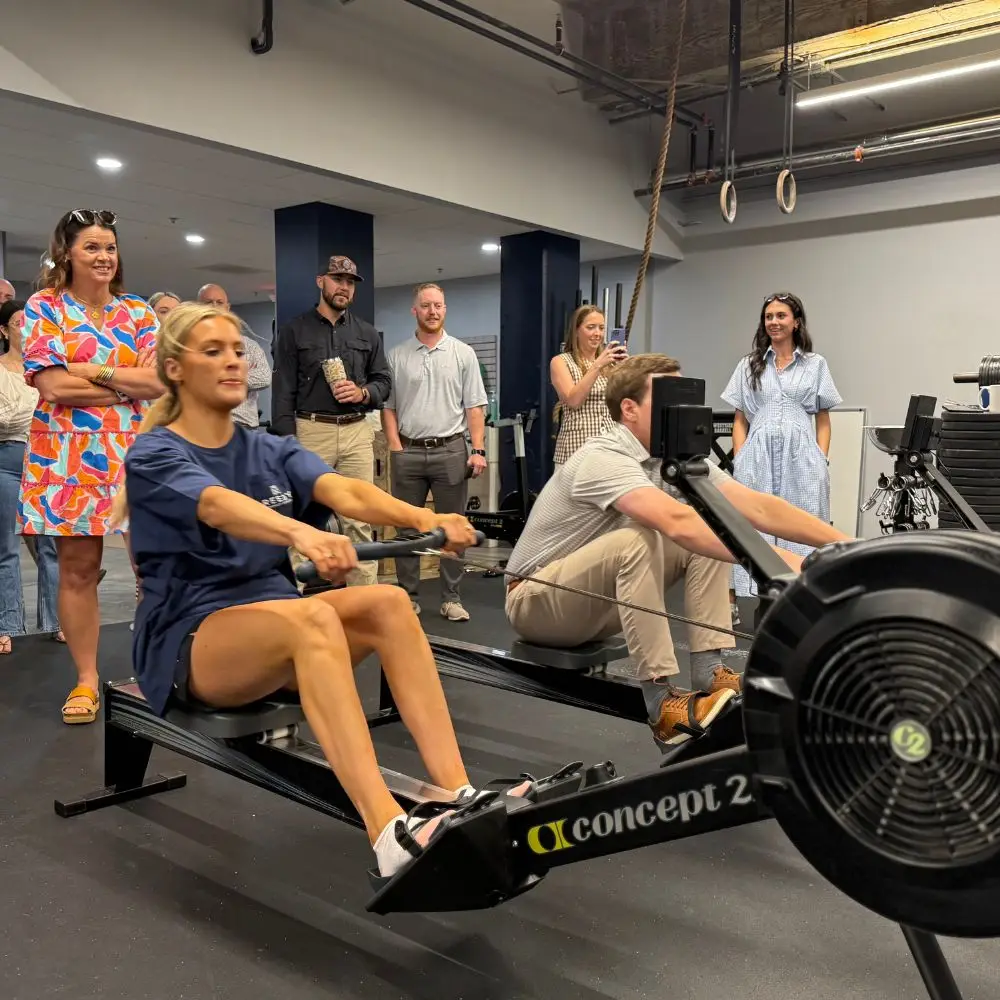
Ask a room of business owners about morale and you get polite nods. Then someone changes the subject. It sounds fuzzy. Hard to measure. The stuff you talk about after the real numbers.
But morale sits underneath all the numbers. It decides whether people tell you about a problem early or hide it. Whether the new hire gets pulled into the group or eats lunch alone for six months. Whether "we're a team" is a poster on the wall or something people actually mean.
This is the second post in our series on corporate fitness. The first one covered productivity — more energy after lunch, fewer aches from desk life, better sleep. This one is about the part that is harder to measure but just as real: what happens to a team when they work out together.
What Team Morale Really Means
Forget the fuzzy version. Morale is simple: how much effort people give when nobody is making them.
On a team with low morale, people do the job description and nothing more. They keep information to themselves. They quietly look for other jobs while their calendar says "focus time."
On a team with high morale, people raise their hand for the hard project. They say the uncomfortable thing in the meeting, not in the hallway after. They stay through a rough stretch because they like the people they would be leaving.
You cannot buy that with a pizza Friday. It comes from doing real things together — things that take a little effort and a little courage. A workout is exactly that.
Why Working Out Together Beats Team-Building Events
Most team-building fails because everyone knows it is fake. One afternoon of trust falls does not change how Tuesday feels.
A workout habit is different. Here is why:
- It happens every week. Culture is built by what you do weekly, not once a year. Three coworkers who hit the same Tuesday class see each other trying hard, every week, all year.
- Titles disappear in the gym. In a class, the boss is not the boss. She is the person next to you counting reps. People who sweat together talk to each other more honestly back at the office.
- You see each other try. Watching a coworker push through the last hard minutes of a workout builds real respect. No company slideshow can do that.
- It gives people something to talk about besides work. That sounds small. It is not. Teams that only ever talk about deadlines snap under pressure. Teams with something shared outside of work bend without breaking.
You do not need the whole company in matching shirts. Start with a few people and a habit. It spreads, because the people who train come back to the office easier to work with.
What Business Owners Tell Us
This is not a theory. Downtown companies already train at Seven Victory, and the owners notice the change without us asking.
"Several of our employees regularly attend classes at Seven Victory. I have seen an energy ignite in the team and an enhanced commitment to performing at a high-level both personally and professionally."
— Chris Harrison, President, Dunean Capital Management
Read that again. Energy in the team. Commitment that is both personal and professional. He is not talking about step counts. He is talking about how his people show up for each other.
Our own corporate page also carries this claim: 89% of employees with wellness programs are highly engaged and happy at work. Take that as the industry's sales pitch if you want. The version we can stand behind is the one Chris describes — because we watch it happen on our floor every week.
The Gym Itself Has to Be Good
Here is the catch. This only works if people actually like going. Send your team to a crowded warehouse gym where nobody knows their name, and you have not built culture. You have handed out homework.
The small details decide everything. Seven Victory is at 301 North Main Street in downtown Greenville, across from the Hyatt, with indoor garage parking. So a lunch-hour class really fits in a lunch hour. Full locker rooms, showers, and towels mean nobody walks into a 1 p.m. meeting looking like they lost a fight.
And every workout is coached. Group classes are kept small, so the coach can watch everyone's form and people learn each other's names. That matters if a stronger team is the goal. Personal training is there for people who want a plan built around their own body and schedule. Golf fitness, stretch therapy, nutrition coaching, and an infrared sauna round it out — so one membership can fit a team full of very different people.
That is what turns a benefit into a habit. And a habit into culture.
How to Start Small
You do not need a wellness committee or a launch email. You need three or four people who will actually go, and a gym close enough and good enough that they keep going.
We build corporate memberships around your team size. A business punch card is an easy first step — let a few people try classes and see what comes back to the office with them.
Next in this series: the gym stipend problem. It is the most common corporate fitness benefit, and the one almost nobody uses. We will cover why, and what to do instead.
Ask about corporate memberships or book a free intro and come see the place for yourself.